Spring Forward… Again: What Daylight Saving Time Can Teach Us About Communication
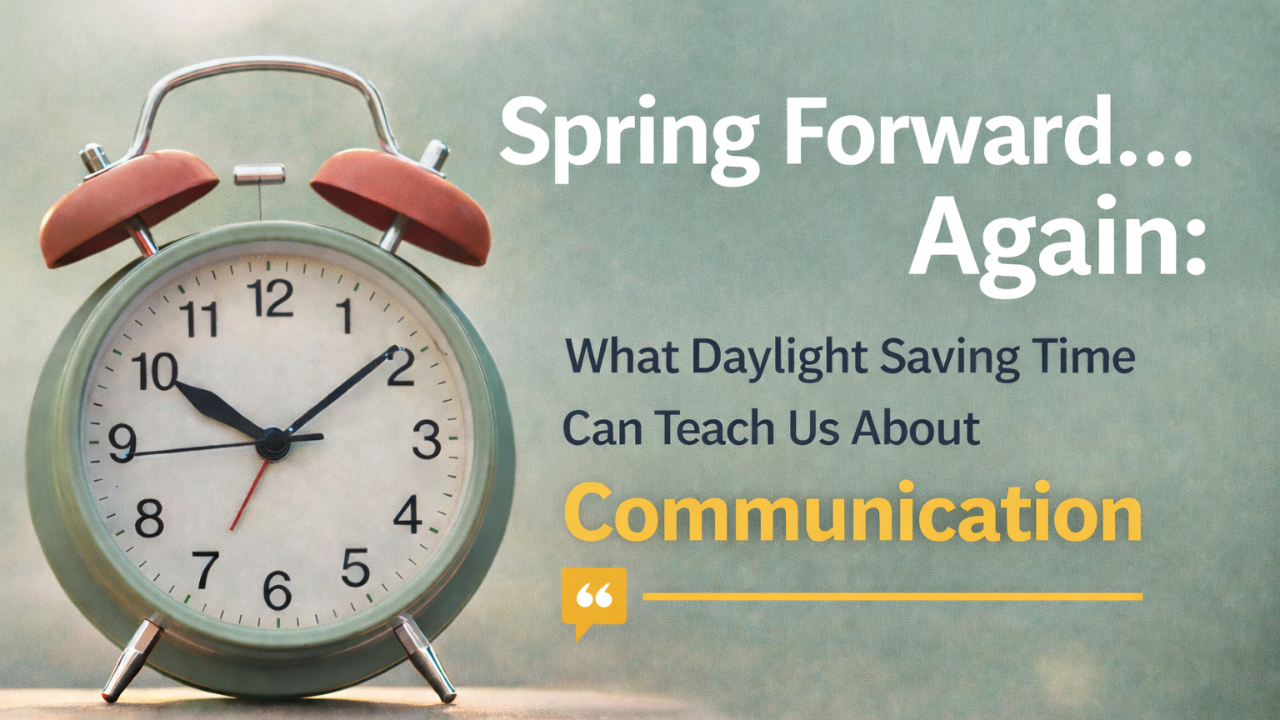
UGH. It’s Daylight Saving Time again.
The clocks jump forward. We lose an hour of sleep. Monday morning arrives faster than anyone asked for. And many of us find ourselves asking the same question we ask every single year:
Why are we still doing this? WHHHHHYYYYYYY?
Whether you love it or not, the reality is simple—every March we adjust the clock and move forward by one hour. It’s a small technical change, yet the ripple effects are immediate. Our routines feel off. Our energy dips. It takes a few days to regain our rhythm.
Interestingly enough, this annual reset offers a parallel to communication.
Communication isn’t static. Context changes. Priorities shift. People come and go. And when we continue communicating the same way we always have, things start to drift out of alignment. Messages get missed. Conversations stall. Teams operate on slightly different “clocks.”
Daylight Saving Time reminds us of something simple and powerful: sometimes a small adjustment creates a meaningful difference.
Here are three ways to apply that “spring forward” mindset to your communication right now.
1. Reset Your Communication Rhythm
When the clocks change, our bodies need time to recalibrate. Communication habits often need the same kind of reset.
Over time, patterns develop inside teams and organizations:
• Meetings multiply.
• Updates become scattered across platforms.
• Expectations around response times become unclear.
Spring is a natural moment to pause and ask:
• Are our meetings still serving a clear purpose?
• Are important updates being shared in the right place?
• Do people know when and how to reach each other?
A few small adjustments can quickly improve alignment:
• Replace long weekly meetings with shorter, focused check-ins (have stand-up meetings to move the agenda along faster).
• Set clear expectations around response times.
• Consolidate updates into a consistent communication channel.
Think of it as resetting the clock on how your team connects.
2. Bring More Clarity to Your Messages
When we lose an hour of sleep, our patience for confusion drops quickly. The same principle applies in communication—unclear messages create friction.
Clarity is one of the most valuable communication skills you can strengthen immediately.
Before sending a message, quickly check three things:
• Purpose: Why am I sending this?
• Expectation: What action should the recipient take?
• Timing: When does this matter?
A short, clear message often works far better than a long explanation that leaves people guessing.
For example:
Instead of writing:
“Sharing this for awareness and we can discuss later.”
Try something clearer:
“Please review the attached proposal before Thursday’s meeting so we can finalize next steps.”
Clear communication respects people’s time and attention—two resources that already feel limited when the clock suddenly jumps ahead.
3. Create More “Daylight” in Conversations
One reason people appreciate Daylight Saving Time is the extra evening light. It creates space—time that feels a little more open and less rushed.
Conversations benefit from the same concept.
Many communication breakdowns happen because people respond before fully listening. Ideas get interrupted. Important perspectives stay unspoken.
You can create more “daylight” in conversations by slowing down just enough to invite input.
A few simple habits help immediately:
• Ask one open question before offering your perspective.
• Pause after someone finishes speaking instead of jumping in.
• Reflect what you heard to confirm understanding.
Even a simple phrase like, “Tell me more about how you see this working,” can open the door to insights that might otherwise stay hidden.
A Small Shift That Makes a Big Difference
Daylight Saving Time might still leave many of us wondering why we’re losing an hour of sleep every spring. That debate may still be going on for the foreseeable future (insert eyeroll).
What we can control, however, is how we adjust.
Communication improves in much the same way the clock does—through small, intentional shifts. Reset your rhythm. Clarify your messages. Create more space for meaningful dialogue.
And who knows? While the lost hour of sleep might still sting a little, your conversations might gain something far more valuable: clarity, connection, and forward momentum.
Need help re-setting your communication clock? Email us to discover how we can be of service to you.